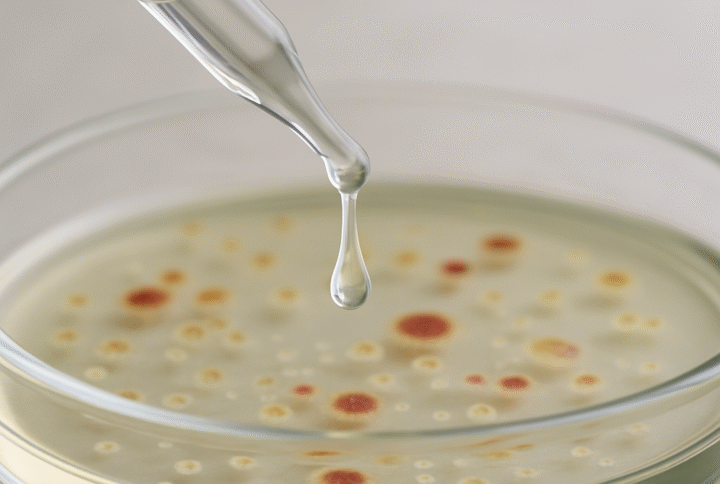

Phenoxyethanol is a widely used antimicrobial preservative in cosmetics and toiletries, valued for its excellent antimicrobial profile. It is particularly suitable for aqueous formulations containing anionic, nonionic, or amphoteric surfactants. With broad-spectrum activity, it is effective against both Gram-positive and Gram-negative bacteria while having only a mild inhibitory effect on the skin’s natural flora. The minimum inhibitory concentration (MIC) typically ranges from 0.25% to 1%. However, due to maximum dosage limits, it may not always be sufficient as a standalone preservative. It is often combined with other ingredients to enhance its effectiveness by reducing the MIC. Synergistic effects between phenoxyethanol and compounds such as ethylhexylglycerin, 1,2-octanediol, or benzyl alcohol, among others, are well documented and widely applied in the industry.
Phenoxyethanol is chemically stable and compatible with most types of compounds. It retains its effectiveness in the presence of common cosmetic ingredients. Owing to its chemical structure, it remains stable at temperatures up to 80 °C, is effective across a wide pH range of 3 to 9, and does not alter the color or odor of the final product.
Scientific studies indicate that phenoxyethanol is safe for all consumers, including children of all ages, when used as a preservative in cosmetic products at concentrations up to 1%. Adverse systemic effects have been observed in animal toxicology studies, but only at exposure levels many times higher than those encountered by consumers. Despite its extensive use in cosmetics, phenoxyethanol is a rare sensitizer and is regarded as one of the most well-tolerated preservatives available for cosmetic formulations.